Idle Idol — The Japanese Mascot

Edward & John Harrison 日本のマスコット

What is this?

これは何?

In Japan, characters aren't confined to screens and packaging. They stand in the street. Fibreglass chefs guard restaurant doors, elephants in knitted jumpers wait outside pharmacies, and every town, police force and fire brigade has a face of its own.

Idle Idol documents these three-dimensional characters: the yuru-chara (loose characters, the wobbly local mascots that represent towns and products), the shop greeters, the antique advertising figures and the one-off oddities. Brothers Edward and John Harrison spent years collecting them across Japan, Ed behind the camera, learning their names, origins and stories.

The statues are generally motionless, sitting or standing still, observing as people go about their lives. Idle idols, in other words.

Meet the mascots

マスコット紹介

Sixty-one idols from the archive, loosely sorted the way the book sorts them. Click any photo to see it properly.

Heroes & TV stars

ヒーロー

Manga, anime and television characters who stepped off the screen and onto the pavement.

Doraemon, robotic cat from the 22nd century, appointed Japan's first anime ambassador in 2008. Duties appear light.
Doraemon, merchandised. Socks sold separately, in every possible sense.
Domo-kun at home, entertaining. NHK's mascot lives in a cave with a rabbit and keeps a tidy table.
Domo-kun standing by. His mouth is not adjustable.
Mario, having presumably left the kart at home.
Mario, arms folded, guarding a sock display.
Kenshirō of Fist of the North Star. He makes bad guys explode by pressing secret channelling points. Currently off duty.
Ultraman, 130 feet tall in the fiction, rather less here.
One of the Ultra family, silver with pigtail horns, keeping watch over the pavement.
Kanegon, the coin-eating kaijū (monster) from Ultra Q, stationed appropriately beside the capsule machines.
Totoro, home-made. Studio Ghibli did not supervise.

Legends

伝説

Long before towns hired designers, Japan's streets already had characters. The newcomers just joined the queue.
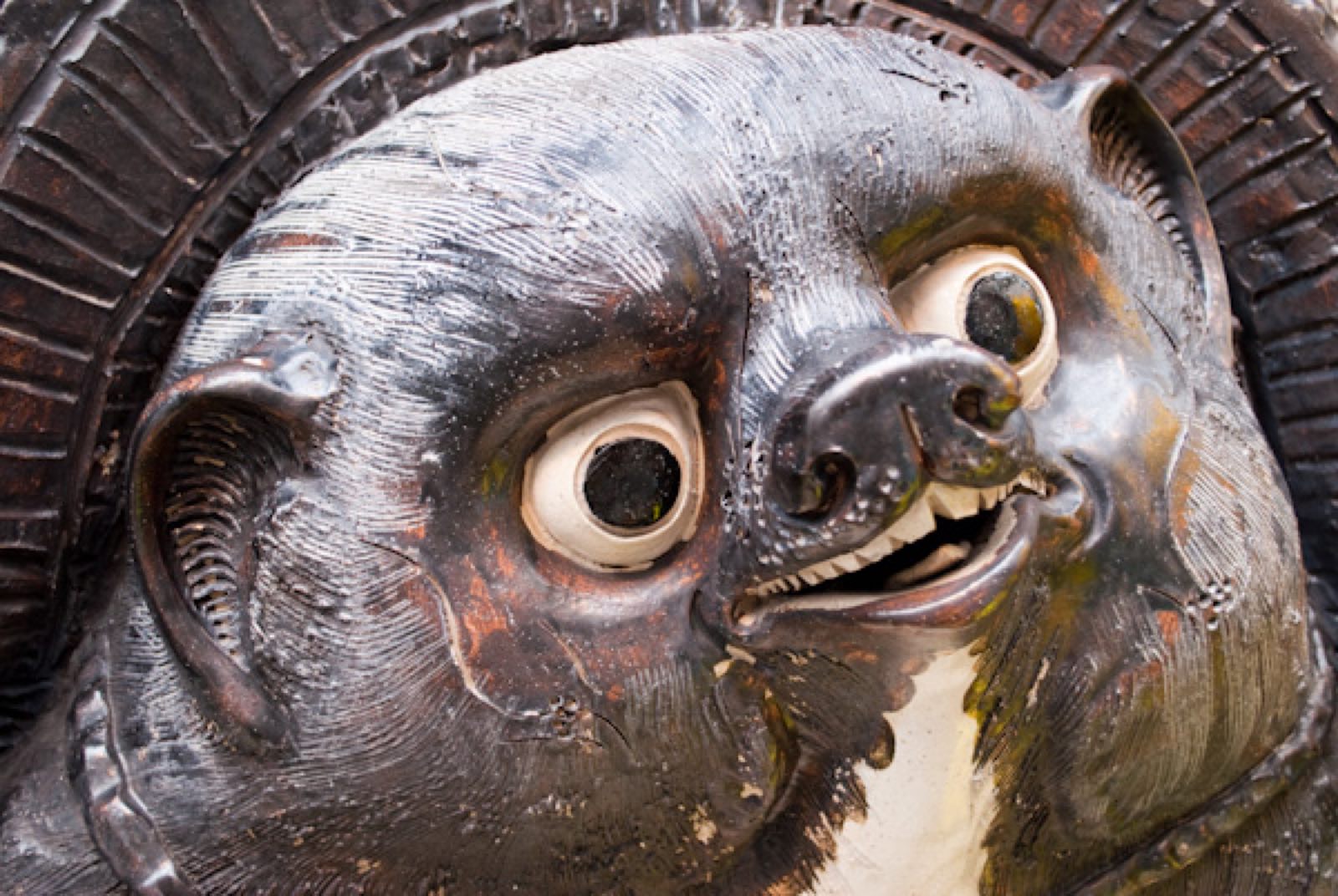
A tanuki (raccoon dog, folklore's shapeshifter) with a microphone. The big belly is traditional, the mic less so.
Maneki-neko (the beckoning cat) at maximum size. Raised right paw attracts money. Human for scale.
Sentō-kun in bronze: a young Buddha with deer antlers, made for Nara's 1,300th birthday. Criticised for not being cute enough. The goods sold well regardless.
A tanuki interpreted loosely, and unforgettably.
Extreme close-up of a weathered wooden tanuki face, eyes wide, whiskers scored into the grain.
A tanuki who has seen weather.

Shopfront greeters

店先

Pharmacies, camera shops and confectioners, each with a face out front, always welcoming, never off shift.
Sato-chan and friend, fresh out of the box. The Sato Pharmaceutical elephants may be the most common mascots in Japan.
Satoko-chan in a kimono. Shops dress their elephants; the pink ones are the most stolen.
Satoko-chan supporting the Mariners this season.
A Sato-chan gone bronze with age, still on duty.
Momo-chan, mascot for a glasses shop, modelled on the folk hero Momotarō. The glasses are the point.
Koumon-sama outside a seal-carver's shop, modelled on TV's wandering vice-shōgun. The beard is accurate.
Nyanta, mascot for a photo shop: a maneki-neko with a camera round his neck. Likes picnics and travel photography.
Higuchi Pharmacy's founder rides an elephant and points at his goal of 1,327 stores. He has yet to reach it.
Giant spectacles with an eye chart, in case of doubt about what's sold here.
Tospo, a postbox with opinions, from the TV show Downtown DX. People post sightings of celebrities into his mouth.
A litter bin, watching.
The Sorabears: two polar bears who woke up on an iceberg and can't find their mother. Created to raise climate-change awareness. Effective.
One of the Ells pelicans, surveying Ikebukuro from a love hotel.
Kero-chan, the pharmacy frog, off his perch and thinking about it.
A Kero frog out front, arms wide, as since 1963.
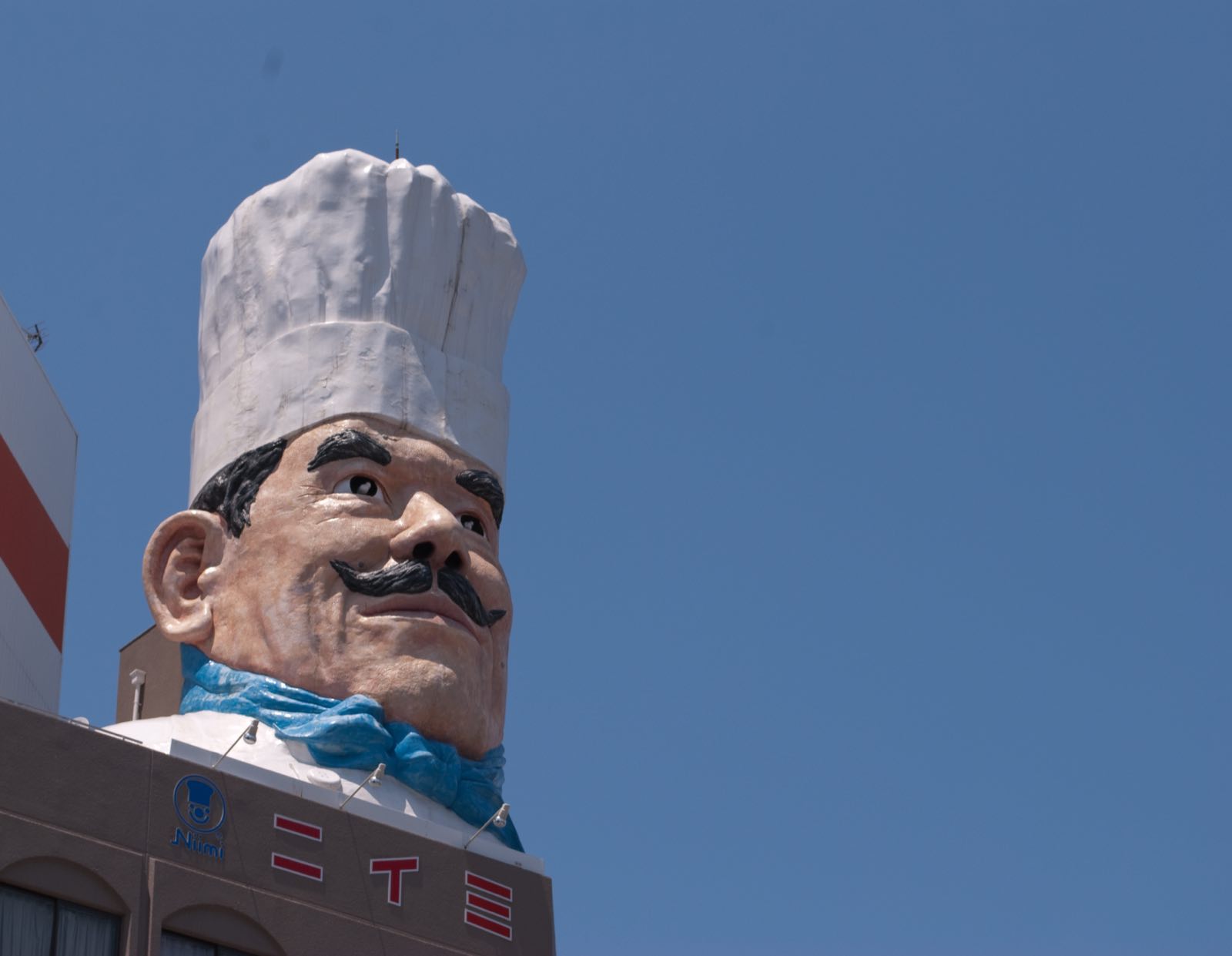
A giant chef statue with a tall white hat and curled moustache, photographed from below against a clear blue sky.
The giant chef of kitchen town, staring nobly over the rooftops.

Chefs & feasts

料理人

Restaurants take mascots seriously. The staff turnover is zero and nobody eats the stock. Almost nobody.

Colonel Sanders in a happi coat, holding the bucket. Japan dresses its Colonels seasonally; this helped make KFC a Christmas dinner.
Donald McDonald, as he's known in Japan. Arrived in Ginza, 1971.
Big Boy, plate aloft since 1978 in Japan. It holds hamburger steak here, no bun.
An octopus in a headscarf above the Pizza Ball House, which sells takoyaki (octopus dumplings). The menu writes itself.
Sukare-chan, the seagull in a navy uniform who promotes Yokosuka Navy Curry. He eats curry incessantly but doesn't like it spicy.
Ni-kun and Sei-chan, twins from Maryland who liked Japan so much they stayed to sell soft-serve.
A pig presenting the day's plates.
A pig offering dumplings while eating one.
A pig in chef's whites, keeping a gourd safe.
Daruma Daijin, made to order with bulging eyes and a protruding chin. His voice warns customers against double-dipping in the shared sauce.

Guardians of the street

見張り番

Construction barriers, fire brigades, police boxes and playgrounds. Somebody has to keep an eye on things.
A wooden workman apologises for the roadworks and points the way round them.
Rail workmen in day-glo, guarding the barriers in numbers.
A hard-hatted sign man, directing traffic indefinitely.
Kyūta, mascot of the Tokyo fire department. Blue helmet for water, red suit for fearlessness, 119 on his chest for the emergency number.
The fire-elephant of the Ikebukuro disaster prevention centre, teaching children what to do in an emergency.
Kyūta at full size, with colleagues.
Pipo-kun, face of the Tokyo police: ears that hear people in trouble, an antenna that catches quick movement. Made from the best parts of several animals.
A robot of the old school, all teeth.
Tetsujin 28-gō, known as Gigantor in America, asking politely not to be photographed.
King Robo, streetside, ready.
The 59-foot Gundam at Odaiba, built for the anime's 30th anniversary. The neighbourhood's largest resident.
A playground panda, pole in mouth, mid-shift.
A playground hippo who has swallowed decades of children feet-first.
A wooden saxophonist in sunglasses, mid-solo.
A turtle in a flat cap with a clarinet. No further information available.
A carved log-carrier catching up on his reading.
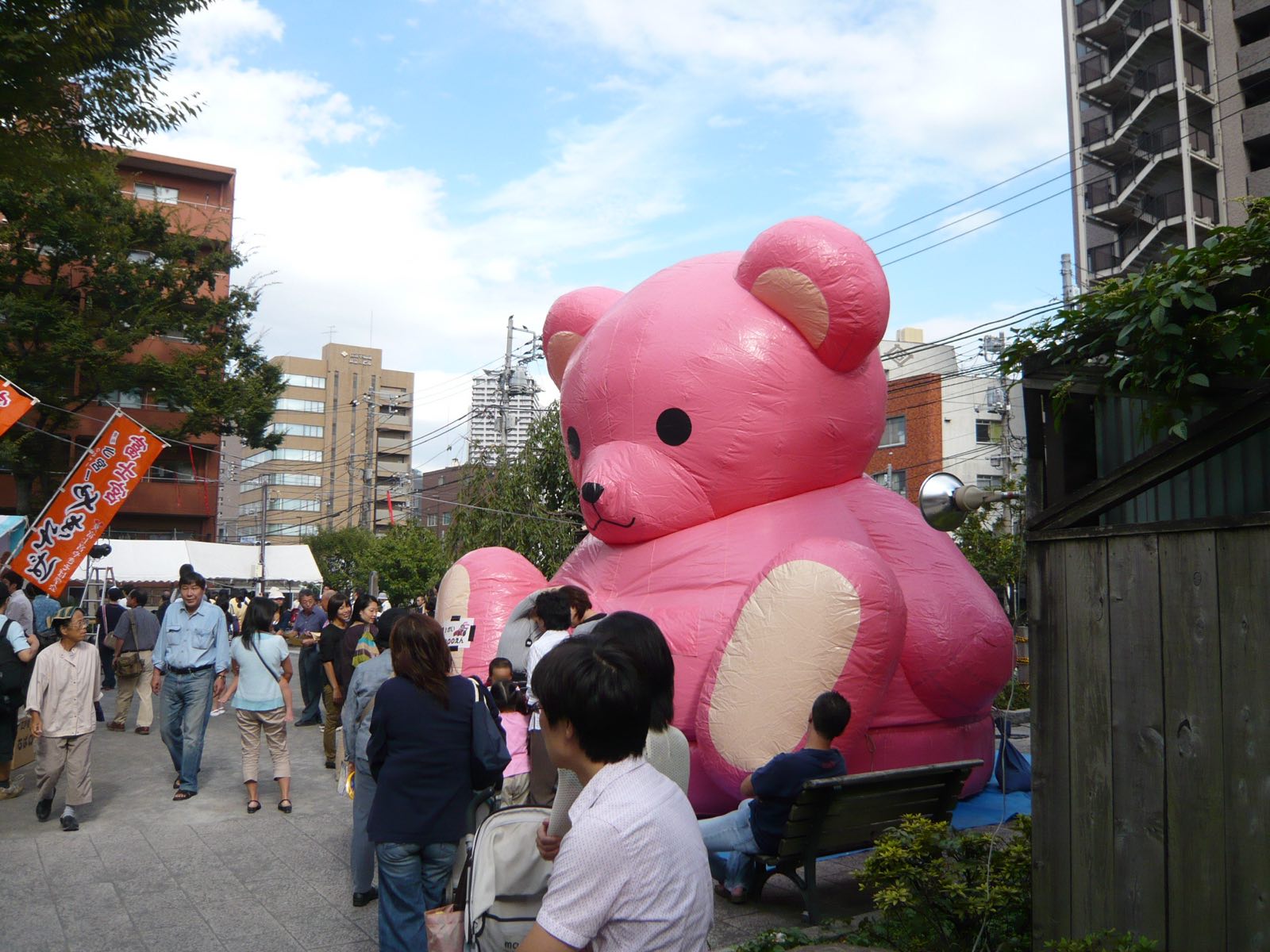
An enormous pink inflatable bear looming over a crowded festival street, trees in the foreground.
A bear the size of a building, arriving over the crowd.

Inflatables

空気

Some idols are ninety per cent air. They arrive by pump and leave by folding.

Pikachu and the Suica penguin, briefly at the same press event.
The Earth as a drinks can, giving a thumbs up.

The book

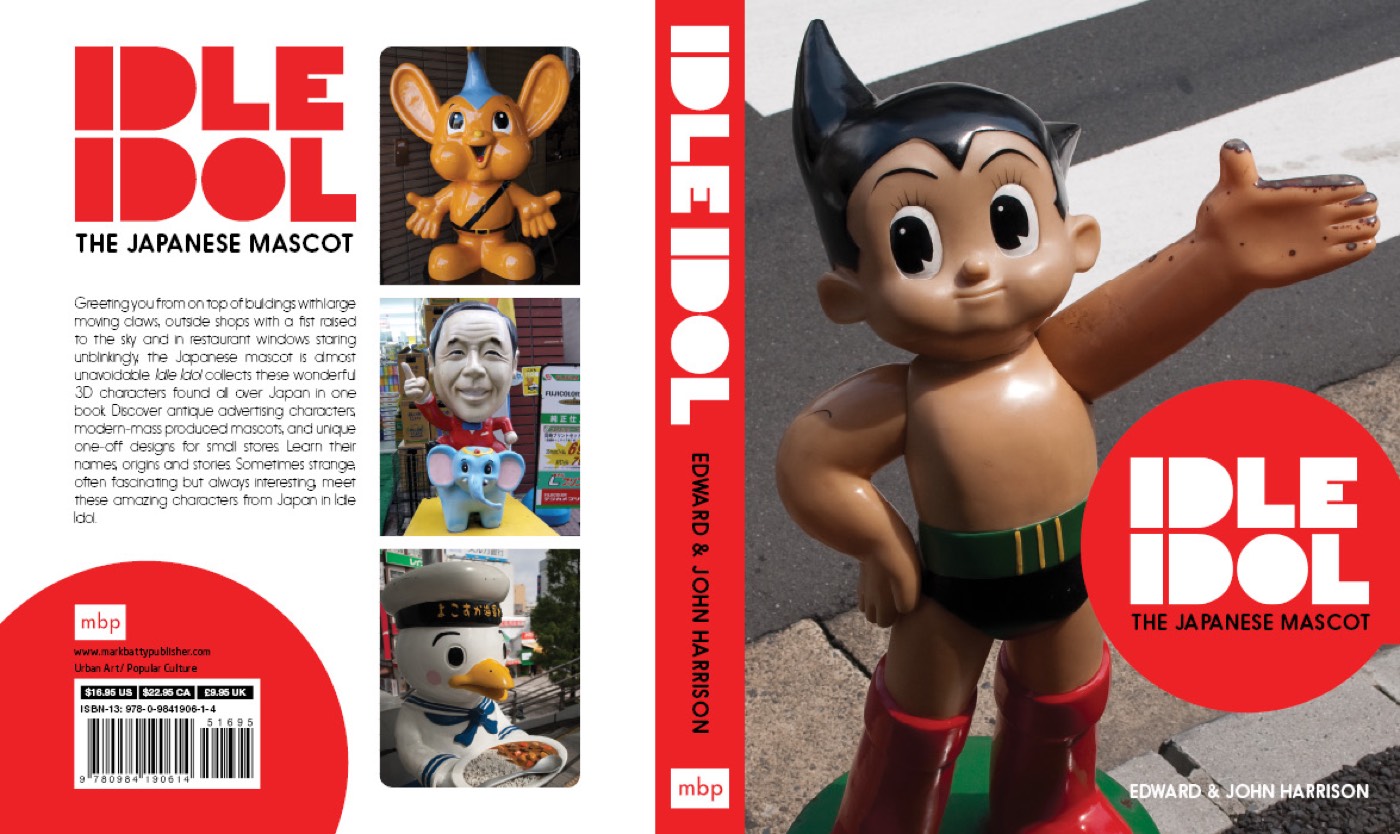
The Idle Idol book cover: an Astro Boy statue on a street crossing, with the red circle logo, spine and back cover showing more mascots.
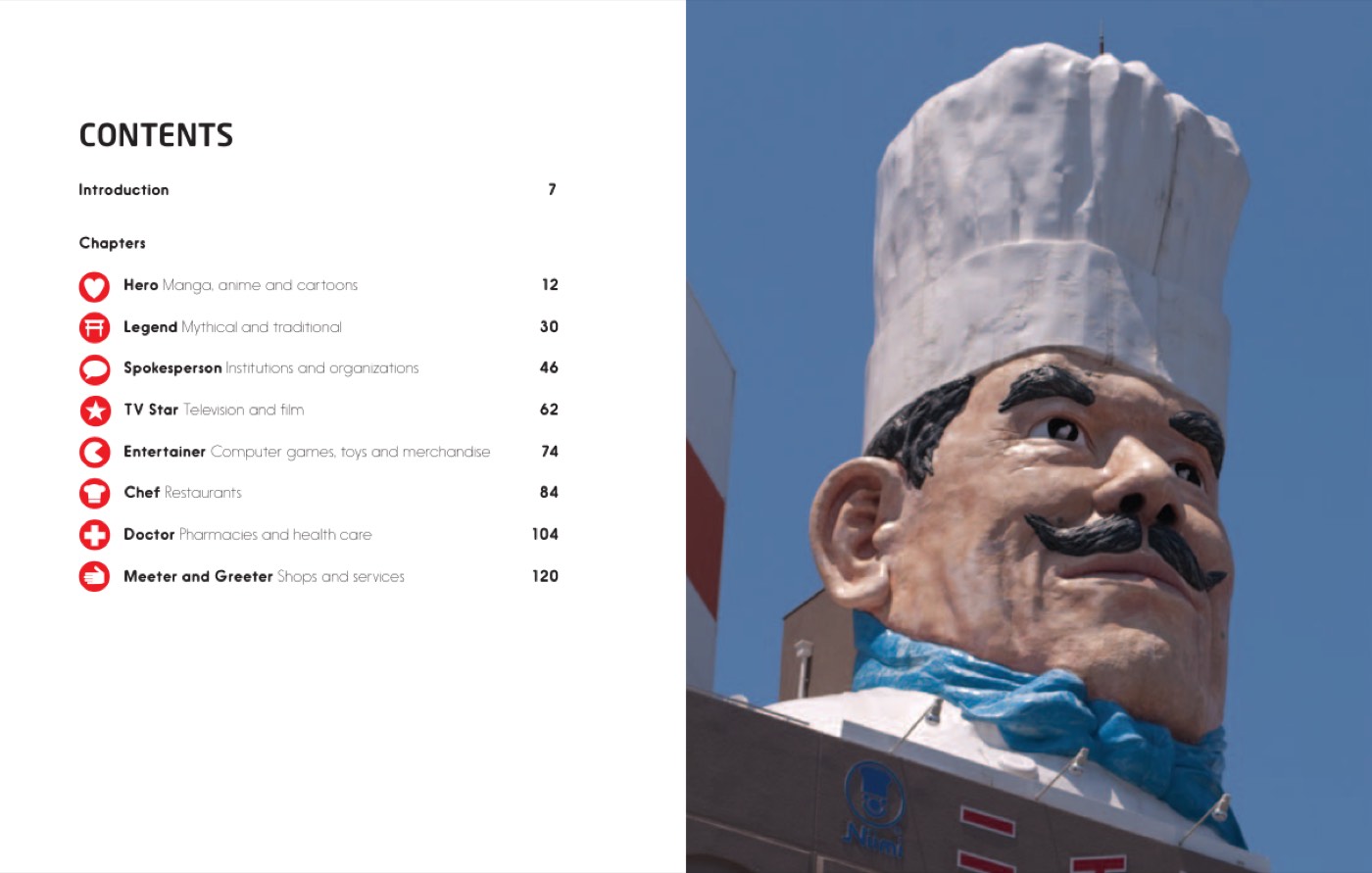
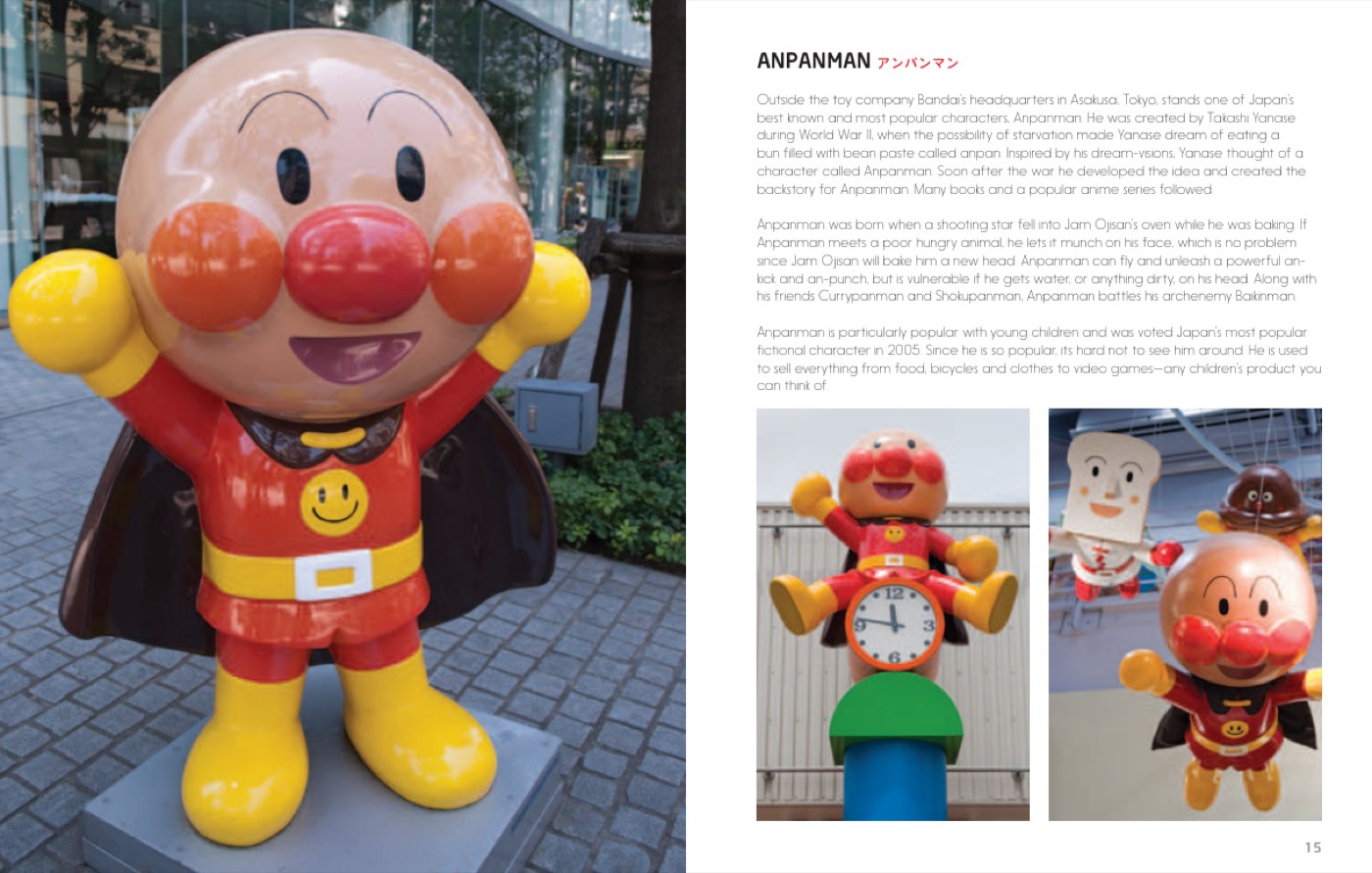
A book spread: the contents page listing eight chapters, opposite a photo of a giant chef statue. A book spread about Anpanman: a large statue of the round-headed superhero, with essay text and katakana heading.

Idle Idol: The Japanese Mascot collects the best of the archive in print: eight chapters of heroes, legends, spokespersons, TV stars, entertainers, chefs, doctors, and meeters and greeters. Each idol gets its name, origin and story.

Published by Mark Batty Publisher, New York, 2010. Distributed outside North America by Thames & Hudson. Out of print, findable with patience.

Find it on Amazon